Hell froze over.1 The Mac has a touchscreen. 14- and 16-inch MacBook Pro, a tandem-OLED display Apple is calling PROLED XDR, M5 Pro or M5 Max, Dynamic Island instead of the notch, the glowing logo back on the lid. $2,899, shipping November 6.
Everybody has reposted the same clip from October 2010. It’s almost a meme. At Back to the Mac, Jobs put up a finger reaching for a MacBook Pro’s screen (“the first thing you think of is this”), and then took it apart: “We’ve done tons of user testing on this, and it turns out it doesn’t work. Touch surfaces don’t want to be vertical. It gives great demo, but after a short period of time you start to fatigue, and after an extended period of time, your arm wants to fall off.”
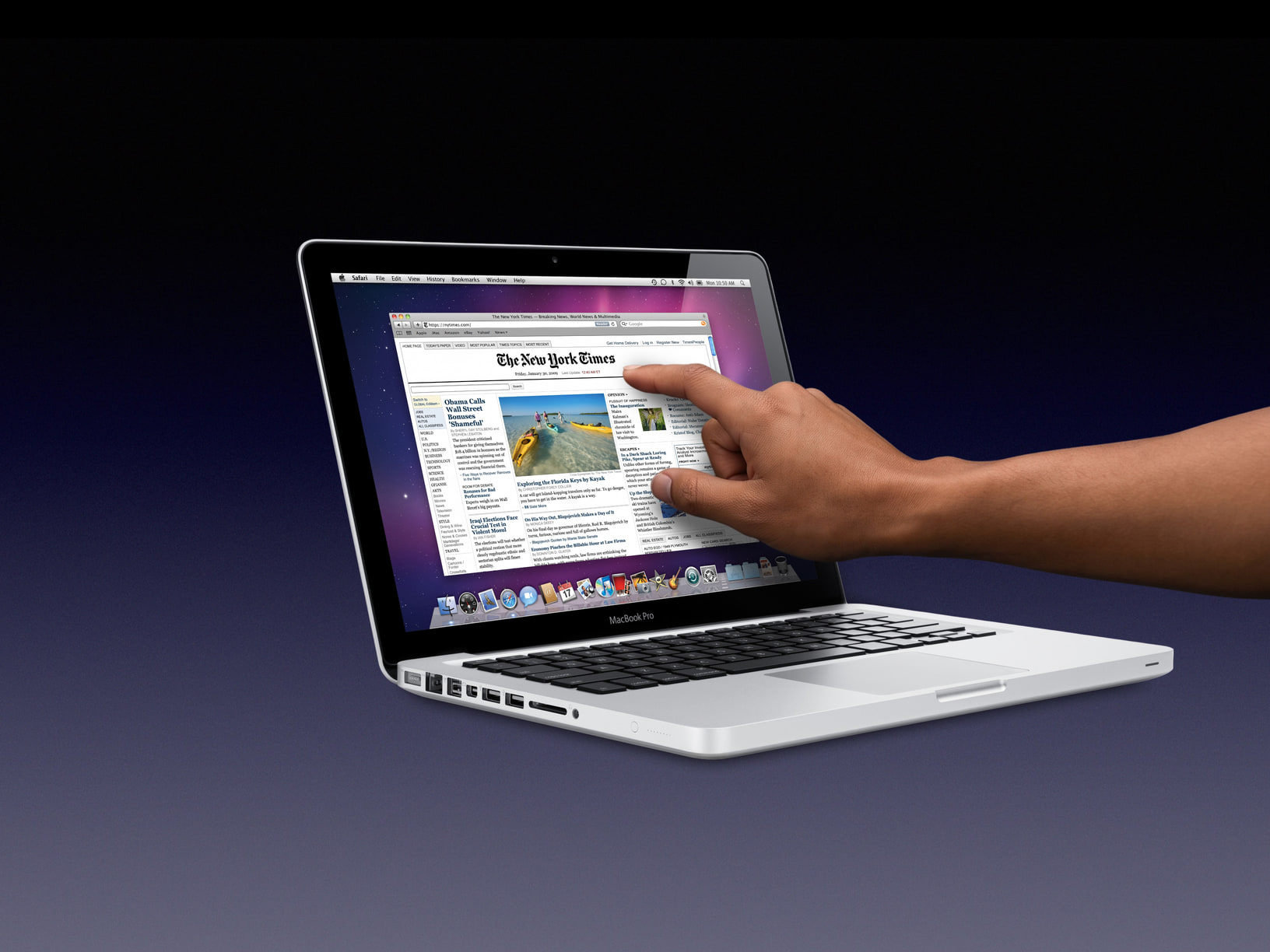
What gets cut is the rest of the argument, which was about geometry. Three months earlier Apple had shipped the Magic Trackpad: multi-touch, on the desk, horizontal, exactly where he said it belonged. The Mac has had multi-touch for 16 years. It just had it lying flat.
So the 2026 answer is his own premise with the conclusion flipped. John Ternus: “The Mac is first and foremost an indirect input device, built around the trackpad and keyboard. But I think there’s times when it’s comfortable and handy to have touch.” He describes the pitch as “all of these things, and, oh yeah, it has touch as well.” The press release is careful in the same way: swipe to scroll, pinch a photo, double-tap a window to fill the screen, all of it “in tandem with the keyboard shortcuts and trackpad gestures pros know and love.”
I think it’s fine. Touch you never have to reach for costs nothing, and the younglings in my family have never understood why a Mac is the one screen that ignores them. They reach up, tap, and nothing happens. What I like more is the pattern: between this and the Duo, Apple is making new shapes again, and some of them are going to be wrong.
MKBHD, after trying one: “I’d upgrade for the weight savings before I would for the touchscreen.” The 14-inch did lose half a pound, 3.5 down to 3.
The part you’ll actually be dealing with is the corners.2 Jeff Nadeau on the new display: the bottom screen corners are rounded too, and AppKit would rather keep your window’s corners concentric with the display than clip them — drag a window into one and its radius changes under you, while the content inside steps away from it. There are APIs for all of it (NSView.LayoutRegion, GeometryProxy.containerCornerInsets, ContainerRelativeShape, UICornerConfiguration), which is a lot of machinery for a corner. The long national nightmare of concentrism everywhere is not over.
Footnotes
-
Apple’s own words, on the 2003 poster for iTunes for Windows: “Hell froze over. Introducing iTunes for Windows. The best Windows app ever written.” That one sold for $303. I desperately need it on a wall, so consider this an open invitation. ↩
-
If you’re a developer, that is. ↩